


What Is BMW Repair and Why Is It Important?
BMW repair refers to the process of identifying, fixing, and maintaining different parts of a BMW vehicle. These repairs can include mechanical components, electrical systems, engine parts, tires, headlights, brakes, batteries, and other essential systems.
BMW vehicles use advanced engineering and electronic technology. This means that some problems cannot be identified through a simple visual inspection. Professional diagnostic equipment may be required to understand what is happening inside the vehicle.
Regular BMW maintenance and timely repairs are important for several reasons:
- Better performance: Proper maintenance helps the engine and other components work efficiently.
- Improved safety: Working brakes, tires, lights, and steering systems help protect drivers and passengers.
- Lower repair expenses: Fixing small problems early can prevent expensive damage.
- Longer vehicle life: Regular servicing helps important components last longer.
- Better resale value: A properly maintained BMW is generally more attractive to potential buyers.
1. BMW Headlight Repair: Why Do BMW Headlights Stop Working?

Headlights are among the most important safety features of any vehicle. BMW headlights are designed with advanced lighting technology, including LED, adaptive, and other lighting systems depending on the model and year.
However, BMW headlights can sometimes become dim, stop working, flicker, or develop moisture inside the housing.
Common reasons for BMW headlight problems
- Burned-out bulb: Traditional bulbs eventually stop working because of normal use.
- Damaged wiring: Loose connections or damaged wires can interrupt the electrical supply.
- Faulty headlight control module: Electronic control problems may prevent the lights from working correctly.
- Moisture inside the headlight: Damaged seals can allow water to enter the headlight housing.
- Damaged LED components: LED lighting systems may require specialist repair or replacement.
How can you identify a headlight problem?
You may notice that one headlight is not turning on, the brightness is decreasing, or a warning message appears on the dashboard. Sometimes, the headlight may work intermittently.
How is BMW headlight repair performed?
The repair process depends on the problem. A technician may inspect the bulb, wiring, connectors, fuse, and control module. If moisture is present, the housing and seals should also be inspected.
If the headlight assembly is damaged beyond repair, replacement may be necessary.
Maintenance tip: Regularly inspect your headlights and clean their outer lenses. Never ignore a headlight warning because poor visibility can increase the risk of an accident.

2. BMW Tire Repair: Common Tire Problems and Solutions
Tires play an important role in vehicle safety, handling, braking, and fuel efficiency. BMW vehicles often use performance-oriented tires designed to provide better road grip and driving stability.
However, tire problems can develop because of road conditions, incorrect air pressure, poor alignment, or normal wear.
Common BMW tire problems
- Low tire pressure: Incorrect pressure can affect handling and tire life.
- Tire punctures: Nails, screws, and sharp objects can damage the tire.
- Uneven tire wear: Incorrect wheel alignment or suspension problems can cause uneven wear.
- Sidewall damage: Hitting potholes or curbs can damage the tire structure.
- Tire vibration: Unbalanced wheels or damaged tires may cause steering wheel vibration.
Why does BMW tire pressure decrease?
Tire pressure can decrease because of temperature changes, small punctures, damaged valves, or air leakage around the wheel rim.
BMW vehicles equipped with a Tire Pressure Monitoring System (TPMS) may display a warning when pressure becomes too low.
How to fix BMW tire problems
First, check the pressure in all four tires using a reliable pressure gauge. Follow the recommended pressure shown on the vehicle’s door-jamb label or owner’s manual.
A small puncture in the repairable tread area may sometimes be repaired professionally. However, sidewall damage, large punctures, or structural damage generally require tire replacement.
Maintenance tip: Check tire pressure regularly, inspect tread depth, and rotate tires according to the vehicle manufacturer’s recommendations.

3. BMW Engine Repair: Common Engine Problems and Their Causes
The engine is one of the most important parts of a BMW. It produces the power needed to move the vehicle and supports its overall driving performance.
However, engine problems can develop because of poor maintenance, oil leaks, overheating, worn components, or electrical faults.
Common BMW engine problems
Engine oil leaks
Oil leaks are a common reason BMW owners visit repair workshops. Leaks may develop around valve cover gaskets, oil filter housing gaskets, oil pans, or other seals.
You may notice oil spots under the car, a burning oil smell, or a low oil level warning.
Engine overheating
An overheating engine can cause serious damage if you continue driving. Possible causes include coolant leaks, a faulty thermostat, water pump problems, radiator issues, or a malfunctioning cooling fan.
If the temperature warning appears, stop somewhere safe and switch off the engine. Never open a hot coolant reservoir because pressurized coolant can cause severe burns.
Engine misfiring
Engine misfires can cause rough idling, shaking, poor acceleration, and reduced fuel efficiency.
Possible causes include:
- Faulty ignition coils.
- Worn spark plugs.
- Fuel injector problems.
- Vacuum leaks.
- Fuel delivery issues.
Check engine light
The check engine light indicates that the vehicle’s engine management system has detected a problem. It does not always mean the engine itself is damaged.
A diagnostic scan can help identify the stored fault codes and guide further inspection.
How to prevent BMW engine problems
- Change engine oil at the recommended intervals.
- Use the correct oil specification for your BMW model.
- Check coolant levels when the engine is cold.
- Replace worn spark plugs when required.
- Repair oil and coolant leaks promptly.
- Do not ignore unusual engine sounds.
Remember that different BMW engines have different maintenance requirements. Always check the service schedule for your exact model and engine.
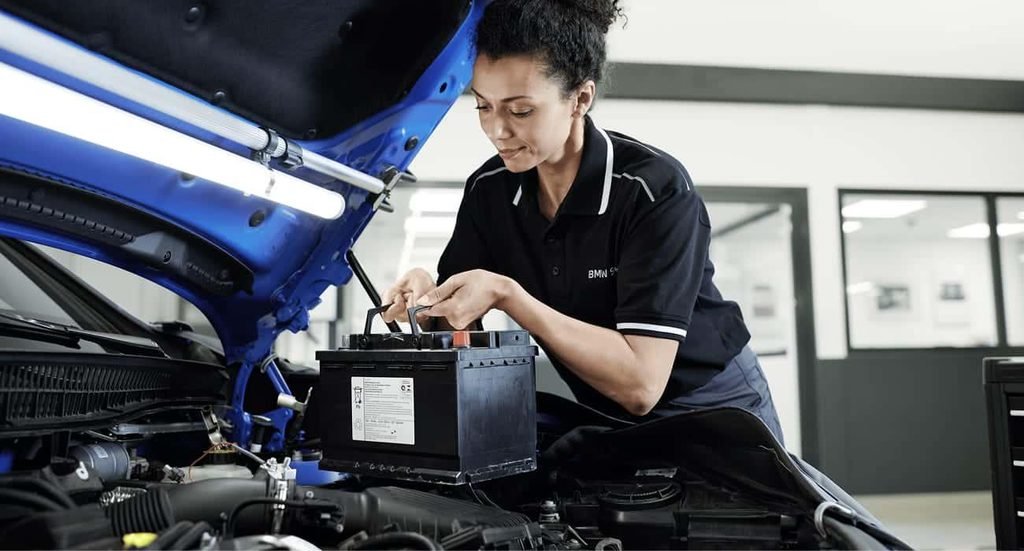
4. BMW Battery Repair and Replacement: Why Does the Battery Die?
A car battery supplies electrical power to start the engine and operate various electronic systems. BMW vehicles also depend on electrical power for features such as central locking, infotainment, sensors, and lighting.
When the battery becomes weak, you may experience starting difficulties or electrical warning messages.
Common signs of a weak BMW battery
- The engine takes longer to start.
- Dashboard lights become dim.
- Electrical systems behave unusually.
- The vehicle displays a battery warning.
- Start-stop functionality may become unavailable.
Why does a BMW battery fail?
There are several possible reasons:
- Battery age and normal wear.
- Leaving lights or electrical accessories switched on.
- Extreme hot or cold temperatures.
- Faulty alternator or charging system.
- Electrical components drawing power when the car is switched off.
How is BMW battery replacement performed?
A technician should first test the battery and charging system to confirm the actual problem.
If replacement is necessary, the correct battery type and specifications must be selected. Some BMW models require battery registration or coding after installation so that the vehicle’s charging system can manage the new battery correctly.
Installing an incorrect battery without following the manufacturer’s requirements can create electrical or charging issues.
Maintenance tip: If your BMW battery repeatedly becomes weak, do not replace it immediately without checking the alternator and possible parasitic electrical drain.
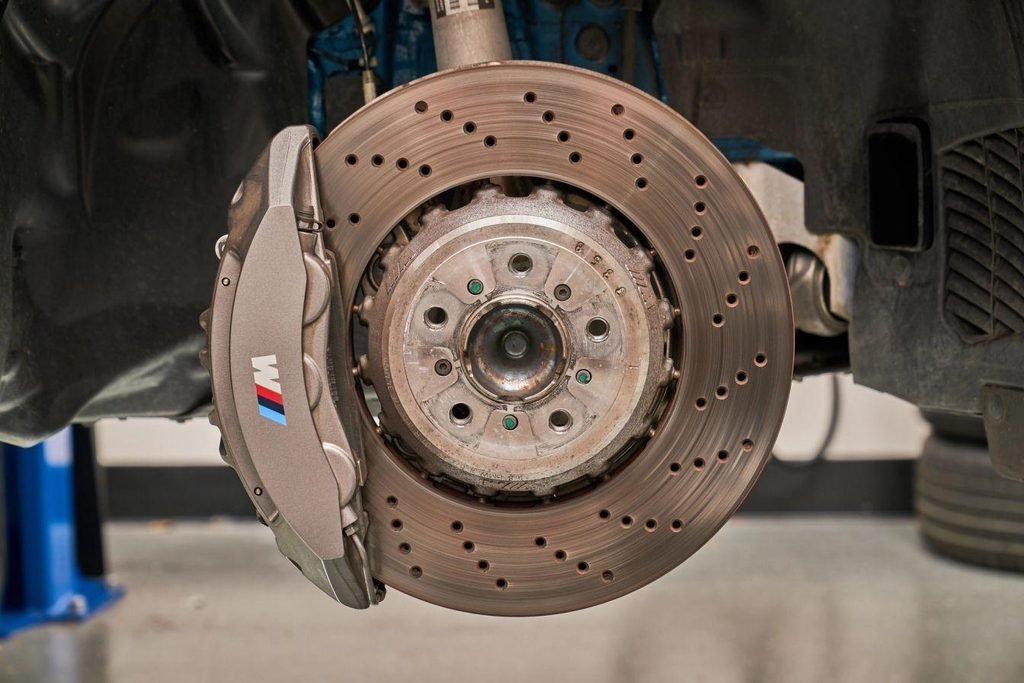
5. BMW Brake Repair: Warning Signs You Should Never Ignore
Brakes are essential for your safety. BMW braking systems are designed to provide controlled stopping power, but brake components gradually wear out through regular use.
Ignoring brake problems can increase stopping distances and put you and other road users at risk.
Common BMW brake problems
- Worn brake pads: Brake pads become thinner over time and eventually need replacement.
- Damaged brake discs: Brake discs can develop excessive wear, scoring, or uneven surfaces.
- Brake noise: Squeaking or grinding sounds may indicate worn pads or other brake problems.
- Brake fluid issues: Low or contaminated brake fluid can affect braking performance.
- ABS warning light: An ABS warning may indicate a sensor, wiring, or control-system problem.
How do you know your BMW needs brake repair?
Pay attention if your vehicle takes longer to stop, the brake pedal feels unusual, or you notice vibration when braking.
A professional technician should inspect the brake pads, discs, calipers, fluid, and electronic braking systems.
Important: Never continue driving if the brakes feel unsafe or you experience a serious loss of braking performance.

6. BMW Transmission Problems: Why Is Your Car Shifting Roughly?
The transmission transfers engine power to the wheels and allows your BMW to change gears smoothly. BMW vehicles use different manual and automatic transmission systems depending on the model.
Transmission problems can affect acceleration, driving comfort, and overall vehicle performance.
Common BMW transmission symptoms
- Delayed gear shifting.
- Jerking when changing gears.
- Unusual noises during acceleration.
- Transmission warning messages.
- Difficulty selecting gears.
- Slipping between gears.
What causes BMW transmission problems?
Some common causes include worn internal components, fluid leaks, electrical faults, damaged sensors, and software-related issues.
In some cases, the transmission may need a software update or an adaptation procedure. In more serious situations, mechanical repairs may be necessary.
How can you prevent transmission damage?
Follow the maintenance recommendations for your specific transmission. Check for fluid leaks and have unusual shifting behaviour diagnosed early.
Do not assume that every transmission problem requires a complete gearbox replacement. Proper diagnosis can help identify whether the issue is electrical, hydraulic, software-related, or mechanical.

7. BMW Cooling System Repair: How to Prevent Engine Overheating
The cooling system helps maintain the correct engine temperature. It uses components such as the radiator, coolant, water pump, thermostat, hoses, and cooling fan.
When one of these components fails, the engine may overheat.
Common cooling system problems
- Coolant leakage from hoses or connections.
- Faulty water pump.
- Damaged radiator.
- Thermostat malfunction.
- Cooling fan failure.
- Expansion tank or cap problems.
Why is coolant important?
Coolant absorbs heat from the engine and transfers it to the radiator, where the heat is released. It also provides protection against corrosion and freezing when the correct coolant specification is used.
Using the wrong coolant or ignoring low coolant levels can cause serious problems.
How to identify cooling system failure
Watch for a rising temperature gauge, coolant warning messages, visible coolant leaks, or steam from the engine compartment.
If your BMW overheats, stop driving as soon as it is safe. Allow the engine to cool before any inspection. Never remove the coolant cap while the system is hot.
8. BMW Electrical Problems: Sensors, Wiring, and Dashboard Warnings
Modern BMW vehicles use electronic control modules and sensors to manage many vehicle functions. These systems control everything from engine performance to lighting, parking assistance, and climate control.
Electrical faults can sometimes be difficult to identify because one problem may affect several different features.
Common BMW electrical issues
- Power windows stop working.
- Central locking becomes unreliable.
- Dashboard warning lights appear.
- Parking sensors stop detecting obstacles.
- Infotainment screens freeze or restart.
- Exterior lights operate incorrectly.
- Battery drains while the vehicle is parked.
Why do these problems happen?
Electrical problems may develop because of damaged wiring, loose connections, faulty sensors, water entering electrical components, weak batteries, or malfunctioning control modules.
How is BMW electrical repair performed?
A technician may use BMW-compatible diagnostic equipment to read fault codes and examine live sensor data.
However, a fault code does not automatically identify the exact damaged part. Proper testing is necessary before replacing components.
Maintenance tip: Avoid installing low-quality electrical accessories or making unnecessary wiring modifications. These can create additional problems in modern vehicles.
9. BMW Suspension and Steering Repair
BMW suspension systems are designed to balance comfort, handling, and stability. However, suspension components can wear out over time, particularly when driving regularly on rough roads.
Common suspension problems
- Worn shock absorbers.
- Damaged control arm bushings.
- Ball joint wear.
- Broken suspension springs.
- Steering vibration.
- Uneven tire wear.
How do you recognize suspension damage?
You may hear knocking sounds when driving over bumps, experience excessive bouncing, or notice that the steering feels less stable.
Another warning sign is uneven tire wear, which can indicate alignment or suspension problems.
How to fix BMW suspension problems
A technician should inspect the suspension, steering joints, shock absorbers, and wheel alignment. Worn components should be replaced with suitable parts.
If your BMW pulls to one side, professional wheel alignment may be needed after mechanical problems have been checked.
10. BMW Air Conditioning Repair: Why Is Your AC Not Cooling?
A properly functioning air conditioning system makes driving more comfortable, especially during hot weather.
BMW air conditioning systems contain several components, including the compressor, condenser, evaporator, refrigerant, sensors, and blower motor.
Common BMW AC problems
- Air conditioning blows warm air.
- Weak airflow from the vents.
- Unusual sounds when AC is switched on.
- Unpleasant smells inside the cabin.
- AC cooling works intermittently.
Why does BMW AC stop cooling?
Possible reasons include refrigerant leaks, a faulty compressor, blocked cabin filters, damaged condenser components, or electrical control problems.
A technician should inspect the system for leaks before adding refrigerant. Simply refilling refrigerant without repairing a leak will not provide a lasting solution.
Maintenance tip: Replace the cabin air filter according to the recommended service interval and have unusual AC performance checked before the problem becomes worse.
11. How Much Does BMW Repair Cost?
BMW repair costs depend on the model, year, engine type, damaged component, labour rates, and availability of replacement parts.
A small repair may be relatively affordable, while major engine or transmission work can be expensive.
Here are some factors that influence the total repair bill:
| Repair type | What affects the cost? |
|---|---|
| Headlight repair | Bulb, LED assembly, wiring or control module |
| Tire replacement | Tire size, brand and type |
| Engine repair | Engine model and damaged components |
| Battery replacement | Battery type, capacity and registration |
| Brake repair | Pads, discs, sensors and labour |
| Transmission repair | Software, fluid or internal components |
| Cooling system | Radiator, pump, thermostat and hoses |
| Electrical repair | Wiring, sensors and control modules |
| Suspension repair | Shock absorbers, arms and bushings |
| AC repair | Compressor, refrigerant and leak repairs |
Should you choose a BMW specialist or a general mechanic?
A general mechanic may be suitable for basic maintenance and simple repairs. However, complicated engine, transmission, and electronic problems are often better handled by a technician experienced with BMW vehicles.
Before approving expensive work, ask for a proper diagnosis, an itemized estimate, and details about the parts being installed.
12. BMW Repair: Genuine Parts vs Aftermarket Parts
Choosing the correct replacement parts is another important part of BMW repair.
You will generally find three options:
Genuine BMW parts: These are supplied through BMW’s official parts network and are designed for the vehicle’s specifications.
OEM parts: These are made by original equipment manufacturers and may be supplied to vehicle manufacturers or the replacement-parts market.
Aftermarket parts: These are produced by independent manufacturers. Their quality, compatibility, and performance can vary.
Not every aftermarket part is poor quality, and not every repair requires an expensive genuine part. The important thing is to choose a reliable component that meets the requirements of your particular BMW.
For safety-critical components such as brakes, tires, steering, and suspension, quality and correct fitment should always come first.
13. How to Maintain Your BMW and Avoid Expensive Repairs
The best way to reduce unexpected BMW repair expenses is to follow a regular maintenance routine.
Here are some practical habits every BMW owner should consider:
- Check engine oil regularly.
- Inspect tire pressure and tread condition.
- Pay attention to dashboard warning lights.
- Check coolant levels when the engine is cold.
- Replace worn brake pads and discs.
- Test the battery and charging system.
- Inspect headlights and exterior lights.
- Listen for unusual engine or suspension noises.
- Follow the correct servicing schedule.
- Keep records of repairs and maintenance.
Remember that maintenance schedules can vary between BMW models. Always consult your owner’s manual and follow the recommendations for your particular vehicle.
Final Thoughts: Keep Your BMW in Excellent Condition
Owning a BMW can be an enjoyable experience, but maintaining it properly is important if you want dependable performance and a comfortable driving experience.
From BMW repair involving headlights, tires, engines, and batteries to brakes, transmissions, suspension, and electrical systems, every component plays an important role in the vehicle’s overall performance.
The biggest mistake many owners make is ignoring small warning signs. A minor oil leak, unusual engine noise, weak battery, or damaged tire may seem unimportant at first, but delaying repairs can sometimes lead to more expensive problems.
Regular inspections, quality replacement parts, and professional diagnosis can help protect your investment and keep your BMW running smoothly.





1 Comment
[…] purchasing an older BMW requires more than simply choosing an attractive model. Engine condition, service history, transmission performance, cooling system, suspension and electrical components all deserve […]