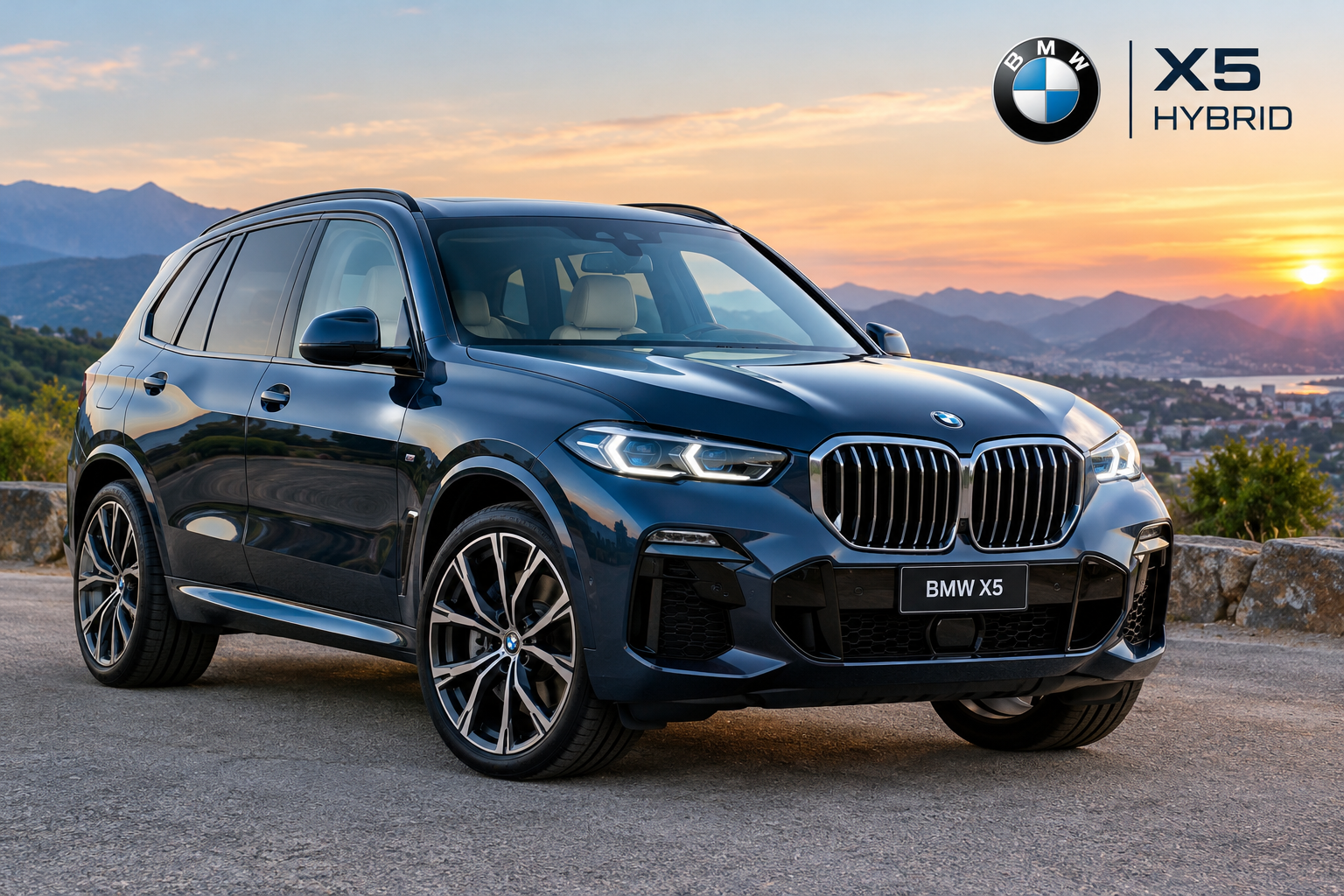
The BMW X5 Hybrid is designed for drivers who want the comfort and performance of a luxury SUV without relying entirely on petrol. It combines a conventional petrol engine with an electric motor, allowing the vehicle to drive on electric power for suitable trips and use its petrol engine when extra range or power is needed.
For families, professionals, and SUV enthusiasts, the BMW X5 Hybrid offers an interesting balance of everyday practicality, strong acceleration, premium interior quality, and modern technology. However, the real benefits depend on how often the vehicle is charged, the type of journeys it makes, and the cost of maintaining a sophisticated hybrid system.
This guide covers the BMW X5 Hybrid’s engine, electric range, fuel economy, charging process, interior, maintenance, potential drawbacks, and important checks for used-car buyers.

BMW X5 Hybrid: What Makes It Different?
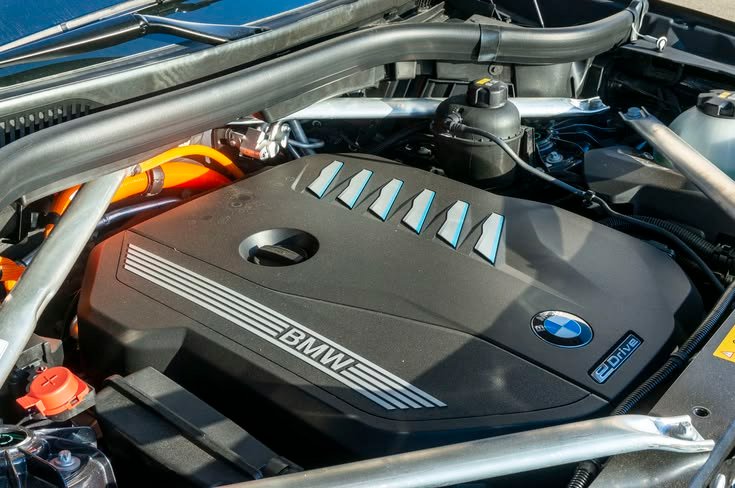
Unlike a conventional petrol-powered X5, the plug-in hybrid version combines a petrol engine with an electric motor and a rechargeable battery. BMW has offered different hybrid versions over the years, so the specifications depend on the model year and market.
One important version is the BMW X5 xDrive50e. BMW’s published specifications for the 2025 model include a 3.0-litre six-cylinder petrol engine, an electric motor, all-wheel drive, and an eight-speed automatic transmission. In the US market, BMW lists a combined system output of 483 horsepower for this version. Official BMW X5 overview.
The electric motor can help the SUV move away smoothly from a stop and deliver quick acceleration. When the battery has sufficient charge, the vehicle can also complete many shorter journeys using electric power alone.
Key point: The BMW X5 Hybrid is a plug-in hybrid, not a fully electric SUV. It still has a petrol engine and can refuel at a normal petrol station.
BMW X5 Hybrid Engine and Performance
Performance is one of the main reasons people consider the BMW X5 Hybrid. Its petrol engine and electric motor work together to provide power when accelerating, overtaking, or joining a motorway.
The electric motor produces useful torque at low speeds, helping the SUV feel responsive in everyday traffic. The petrol engine then provides additional power and supports longer journeys.
The xDrive all-wheel-drive system helps distribute power to the wheels when road conditions or driving demands require it. Combined with the automatic transmission, it is designed to provide smooth progress in city traffic and confident performance on open roads.
However, the BMW X5 Hybrid is a heavy luxury SUV. Tyre condition, road surface, weather, passenger load, and driving style can all affect acceleration and handling. Drivers should not expect every version or model year to deliver identical performance.
When comparing vehicles, check the exact engine designation, official power figures, and equipment package rather than assuming that every BMW X5 Hybrid has the same specifications.
BMW X5 Hybrid Electric Range and Battery
Electric range is one of the most important factors when deciding whether a plug-in hybrid is suitable for your lifestyle.
The BMW X5 Hybrid uses its rechargeable battery to power the electric motor. With sufficient charge, a driver may be able to complete a daily commute, school run, or shopping trip without using much petrol. Once the available electric energy decreases, the petrol engine can take over or work alongside the electric motor.
The official electric range varies by model year, market, wheels, tyres, temperature, and testing method. BMW’s US information for the upcoming X5 50e xDrive has cited a preliminary estimate of up to 44 miles, but buyers should check the certified figure for the specific vehicle they are considering.
Real-world range may be lower in cold weather, at motorway speeds, or when heating and air conditioning use more energy. Frequent hard acceleration can also reduce the distance travelled on a charge.
Battery condition matters particularly when buying a used BMW X5 Hybrid. Ask for a professional hybrid-system inspection and investigate any battery, charging, or drivetrain warning messages before completing the purchase.
BMW X5 Hybrid Fuel Economy
Fuel economy depends heavily on whether the battery is charged regularly. This is why two owners of the same vehicle can report very different petrol consumption.
A driver who charges at home and mostly travels short distances may use significantly less petrol than someone who regularly drives long motorway journeys without charging.
Official plug-in hybrid consumption figures can look exceptionally low because the testing cycle includes electric driving. These figures should not be treated as a guaranteed result for every owner.
For a more realistic estimate, consider three questions:
- How many miles or kilometres do you drive each day?
- Can you charge the vehicle overnight or at work?
- How often do you make longer journeys?
If most trips are short and charging is convenient, the BMW X5 Hybrid may help reduce petrol use. If charging is difficult and most journeys are long, its fuel-saving advantage may be smaller.
Compare the vehicle’s petrol consumption with your actual driving routine rather than relying only on the advertised combined figure.

BMW X5 Hybrid Charging: How Does It Work?
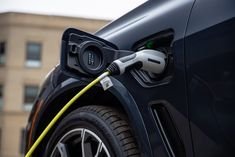
Charging is straightforward once you have compatible equipment and a suitable electricity supply. Unlike a conventional hybrid that recharges its small battery primarily through driving and braking, a plug-in hybrid is designed to be connected to an external power source.
Owners can charge the vehicle at home using suitable charging equipment or at compatible public charging points. Charging time depends on the vehicle’s maximum AC charging rate, the charger’s output, the electrical supply, and the battery’s current state of charge.
For the 2025-era X5 xDrive50e, charging capability and times differ from those of newer or older versions, so consult the exact vehicle manual before purchasing a home charger.
A few practical habits can make ownership easier:
- Charge overnight when convenient.
- Use equipment approved for the vehicle and local electrical standards.
- Check the charging cable and connector for damage.
- Follow the manufacturer’s instructions if a charging fault appears.
- Avoid assuming that every public charging station will offer the same speed or connector compatibility.
If you cannot charge regularly, the vehicle can still operate using its petrol engine. However, you may not receive the full fuel-efficiency benefit that makes a plug-in hybrid attractive in the first place.
BMW X5 Hybrid Interior, Comfort, and Technology
The BMW X5 Hybrid is also designed to feel like a premium family SUV rather than simply an economy-focused vehicle. Depending on the model year and trim, the cabin can include leather or other premium upholstery, electrically adjustable seats, climate control, a digital instrument display, a central infotainment screen, and smartphone connectivity.
The seating position provides a commanding view of the road, while the spacious cabin makes the vehicle suitable for daily commuting and longer family journeys. Storage compartments and a practical rear seating area add to its everyday usefulness.
Technology features vary between model years. Buyers should check whether a particular vehicle includes adaptive cruise control, a head-up display, a surround-view camera, a premium sound system, or other optional equipment.
The hybrid battery and electric drivetrain also affect vehicle packaging. Boot capacity and available storage can differ from those of conventional petrol versions, so inspect the actual vehicle if luggage space is a priority.
BMW X5 Hybrid Maintenance and Running Costs
The BMW X5 Hybrid combines two types of propulsion, which means owners need to consider both conventional engine maintenance and the condition of the hybrid system.
Routine servicing may include engine oil and filter changes, brake inspections, coolant checks, tyre replacement, and diagnostic checks according to BMW’s maintenance schedule. The petrol engine still requires proper servicing even when many journeys are completed using electric power.
The high-voltage battery and electric drivetrain also deserve attention, particularly as a vehicle gets older. Hybrid-specific repairs can be expensive if a major component fails outside its warranty.
Before buying, ask a qualified BMW technician to inspect:
- The high-voltage battery and its cooling system.
- Charging operation and any stored fault codes.
- The petrol engine, transmission, and cooling system.
- The 12-volt battery and electronic systems.
- Tyres, brakes, suspension, and service history.
BMW states that its plug-in hybrids should follow the manufacturer’s scheduled maintenance requirements. Warranty coverage for high-voltage components depends on the country, vehicle, and applicable terms. Check the BMW electric vehicle and hybrid FAQs for US-market information.
These checks are especially useful for imported vehicles, where local warranty coverage and access to specialist repairs may differ.
BMW X5 Hybrid Problems: What Should Buyers Check?
Not every BMW X5 Hybrid will experience faults, but a careful inspection is important because the vehicle contains complex mechanical and electronic systems.
Potential areas to investigate include charging faults, warning lights, battery cooling issues, electronic glitches, and ordinary petrol-engine or transmission problems. Reports from owners can help identify questions worth asking, but an individual complaint does not prove that every vehicle has the same defect.
For example, Consumer Reports’ 2025 BMW X5 plug-in hybrid reliability page includes owner reports relating to charging and electrical systems. These reports are useful background, not a substitute for a proper vehicle inspection.
When looking at a used model, take the following steps:
- Request the complete service and repair history.
- Test the charging system rather than relying on the dashboard display alone.
- Check for active and stored diagnostic trouble codes.
- Confirm whether outstanding recalls or software updates apply to the vehicle identification number.
- Have a hybrid-qualified technician assess the battery and drivetrain.
A test drive should include low-speed driving, normal acceleration, braking, and a check for unusual noises or warning messages. Never ignore a drivetrain or high-voltage system warning simply because the vehicle appears to drive normally.
Is the BMW X5 Hybrid Worth Buying?
The BMW X5 Hybrid can be a strong option for someone who wants a luxury SUV with responsive performance and the flexibility of petrol and electric power. It is particularly appealing to drivers who can charge at home and regularly make shorter journeys.
It may be less suitable for buyers who rarely have access to charging, want the lowest possible repair costs, or need a vehicle that is inexpensive to maintain over many years.
Before making a decision, compare the purchase price, insurance, fuel costs, electricity rates, servicing, battery warranty, and availability of qualified repair specialists. A well-maintained vehicle with a clear history is generally a better prospect than one selected only because it has a lower asking price.
For further research, visit the official BMW X5 model page and compare the exact specifications for the year and trim you intend to buy.
BMW X5 Hybrid: Frequently Asked Questions
Is the BMW X5 Hybrid fully electric?
No. It is a plug-in hybrid that combines a petrol engine with an electric motor and rechargeable battery. It can drive on electric power when conditions and battery charge allow, but it also uses petrol.
How far can a BMW X5 Hybrid travel on electric power?
The range depends on the model year, market, battery charge, weather, driving style, and equipment. Always check the official range for the exact version rather than assuming every X5 Hybrid has the same capability.
Does the BMW X5 Hybrid save fuel?
It can reduce petrol consumption when charged regularly and used for suitable short trips. If the battery is rarely charged, the fuel-saving benefit may be much smaller.
Can you drive a BMW X5 Hybrid when the battery is empty?
Yes, the petrol engine allows the vehicle to continue operating. However, the hybrid system may still manage some battery energy for assistance and energy recovery, so an indicated low charge does not mean the electric components are completely inactive.
Is a used BMW X5 Hybrid a good choice?
It can be, provided the price, service history, battery condition, charging system, and warranty status meet your needs. A specialist pre-purchase inspection is strongly recommended.
Final Thoughts on the BMW X5 Hybrid
The BMW X5 Hybrid brings together luxury, strong performance, electric driving capability, and the flexibility of a petrol engine. For drivers who can charge frequently, it may offer a useful balance between everyday efficiency and long-distance convenience.
The key is to understand the specific model rather than relying on general claims about hybrid vehicles. Check the official specifications, calculate running costs using your own driving habits, and arrange a thorough inspection before buying a used example.
For AutoBasic Labs readers, the most useful takeaway is simple: the BMW X5 Hybrid is worth considering when its charging capability, ownership costs, and performance match your real needs—not just because it carries a hybrid badge.