
Have you ever turned your car key and heard nothing except a clicking sound? Or perhaps your dashboard lights turn on, but the engine refuses to start. These are common signs of a weak or dead car battery. It can happen when you accidentally leave your headlights on, your battery gets old, or your vehicle sits unused for several days.
Knowing how to jump a car is a useful skill for every driver. Instead of waiting for roadside assistance, you may be able to get your vehicle running again with a second car and a set of jumper cables.
However, jump-starting a car is not simply about connecting two batteries. Connecting the cables incorrectly can damage electrical components or cause serious injuries. That is why understanding the correct procedure, battery terminals, jumper cables, and safety precautions is important.
In this guide, we will explain how to jump a car step by step, what equipment you need, how car batteries work, and what to do if your vehicle still refuses to start.
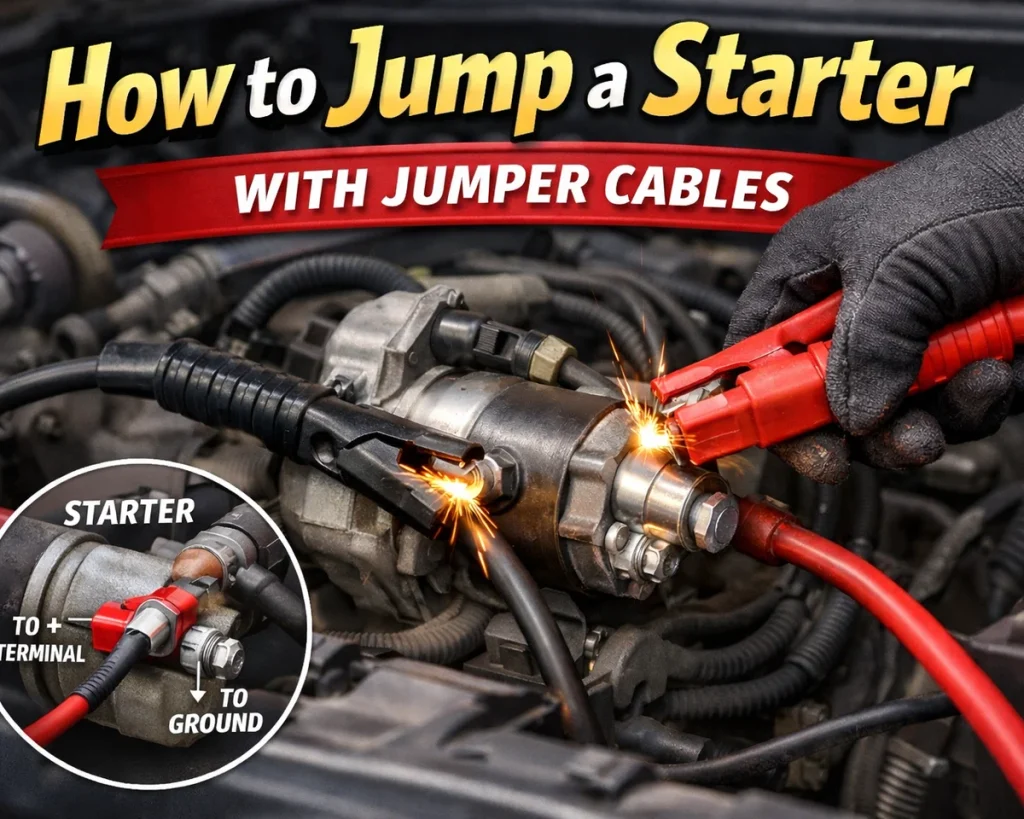
What Does It Mean to Jump-Start a Car?
Jump-starting a car means using electrical power from another vehicle or a portable jump starter to start an engine when its own battery does not have enough power.
A car battery provides the electricity needed to operate the starter motor. When you turn the ignition key or press the start button, the battery sends power to the starter, which turns the engine until it starts running.
If the battery becomes discharged, the starter motor may not receive enough electricity. As a result, you might hear clicking sounds, notice dim dashboard lights, or experience no response when trying to start the vehicle.
A jump-start temporarily supplies the power needed to start the engine. Once the engine is running, the vehicle’s charging system can begin replenishing the battery.
Common Reasons Why a Car Battery Dies
Before learning how to jump a car, it helps to understand why batteries lose their power.
Here are some common reasons:
1. Leaving Headlights On
One of the most common reasons for a dead car battery is leaving headlights or interior lights switched on overnight. These lights continue using electricity even when the engine is turned off.
2. Old or Weak Battery
Most conventional car batteries last around three to five years, although their lifespan depends on weather, driving habits, maintenance, and battery quality.
As a battery gets older, it gradually loses its ability to hold a charge.
3. Extremely Cold or Hot Weather
Cold weather makes it harder for a battery to deliver power, while extreme heat can accelerate battery deterioration. Both conditions can increase the chances of starting problems.
4. Leaving Your Car Unused
If a vehicle remains parked for several weeks, small electrical systems can continue consuming battery power. Eventually, the battery may become too weak to start the engine.
5. Charging System Problems
Sometimes the battery is not the real problem. A faulty alternator, damaged wiring, or poor battery connections can prevent the battery from charging properly.
What Do You Need to Jump-Start a Car?
You do not need complicated equipment to jump-start a standard 12-volt vehicle. However, having the correct tools makes the process easier and safer.
The following items are generally required:
- Jumper cables: Heavy-duty cables used to transfer electrical power between two vehicles.
- A working vehicle: Another compatible vehicle with a charged battery.
- Safety gloves: Help protect your hands when handling battery connections.
- Safety glasses: Provide protection against accidental battery splashes.
- Owner’s manual: Contains the manufacturer’s specific jump-starting instructions.
You can also use a portable car jump starter instead of another vehicle. These devices contain their own rechargeable battery and are useful when roadside assistance is not nearby.
How to Jump a Car Using Jumper Cables: Step-by-Step Guide
Now let’s explain how to jump a car safely using another vehicle and a set of jumper cables.
Before starting, check both vehicles’ owner’s manuals. Make sure they have compatible electrical systems, usually 12 volts. Never attempt to jump-start a damaged, leaking, swollen, or frozen battery.
Step 1: Park Both Vehicles Safely
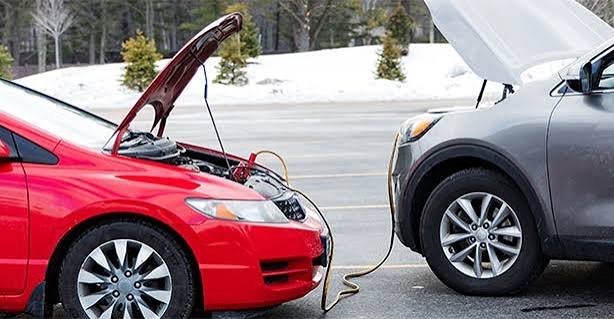
Park the working vehicle close enough for the jumper cables to reach both batteries, but make sure the vehicles do not touch each other.
Put both vehicles in Park if they have automatic transmissions or Neutral if they have manual transmissions. Apply the parking brakes and switch off both engines.
Turn off headlights, air conditioning, radios, and other electrical accessories.
Make sure the vehicles are parked in a well-ventilated area away from traffic.
Step 2: Locate the Battery Terminals
Open both vehicle hoods and locate the batteries or designated jump-starting terminals.
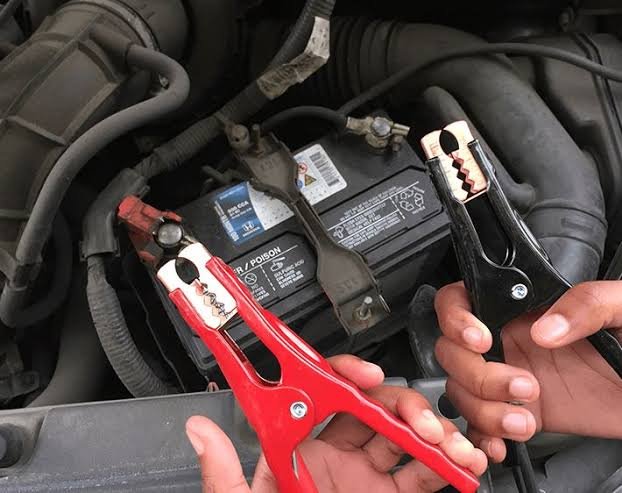
Most car batteries have two main terminals:
- Positive (+): Usually marked with a plus sign and often covered by a red cap.
- Negative (-): Usually marked with a minus sign and commonly connected to a black cable.
Identify both terminals carefully. If you cannot clearly identify them, check the owner’s manual rather than guessing.
Some modern vehicles have remote jump-starting points instead of easily accessible battery terminals.
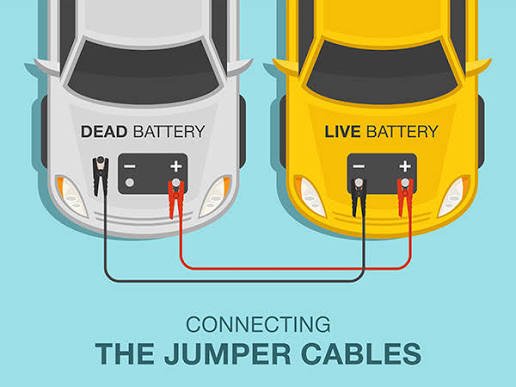
Step 3: Connect the Red Jumper Cable
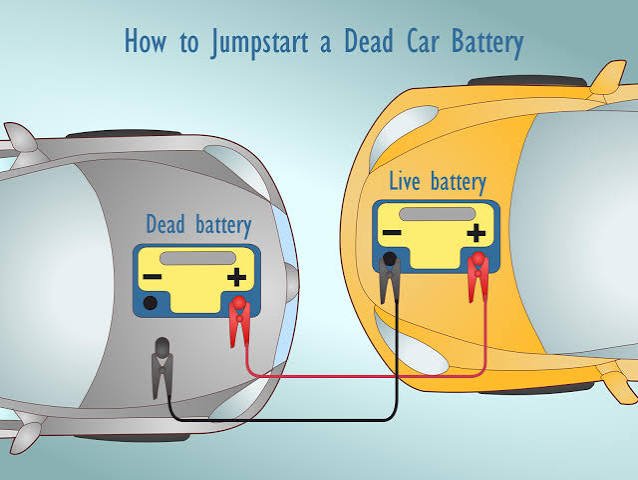
Take the red jumper cable and connect one end to the positive (+) terminal of the dead battery or its designated positive jump-starting point.
Next, connect the other end of the red cable to the positive (+) terminal of the working battery.
Make sure both clamps are firmly attached and cannot easily slip off.
Step 4: Connect the Black Jumper Cable
Take the black jumper cable and connect one end to the negative (-) terminal of the working battery.
For the final connection, attach the other black clamp to an approved, unpainted metal grounding point on the disabled vehicle, away from its battery, fuel system, and moving engine parts.
Do not automatically connect this final clamp to the negative terminal of the dead battery. A spark near a battery can ignite explosive hydrogen gas.
Always follow the manufacturer’s grounding instructions.
Step 5: Start the Working Vehicle
Once all connections are secure, start the working vehicle and allow its engine to run for a few minutes.
Keep the jumper cables away from fans, belts, and other moving components. Do not lean over the batteries while the vehicles are running.
If the working vehicle has an unusual electrical system or its manufacturer gives different instructions, follow those instructions.
Step 6: Start the Vehicle With the Dead Battery
Now try starting the vehicle with the weak battery.
If the engine does not start immediately, wait a few minutes and try again. Avoid repeatedly cranking the starter for long periods.
If the car still refuses to start after a few attempts, stop. There may be another problem with the battery, starter motor, electrical system, or engine.
Step 7: Remove the Jumper Cables Carefully
Once the disabled vehicle starts successfully, remove the cables in the reverse order of connection.
- Remove the black clamp from the disabled vehicle’s grounding point.
- Remove the black clamp from the working vehicle’s negative terminal.
- Remove the red clamp from the working vehicle’s positive terminal.
- Remove the red clamp from the previously dead battery’s positive terminal.
Never allow the metal clamps to touch each other while they are connected to a battery.
How to Use Jumper Cables Without Making Common Mistakes
Jumper cables are simple tools, but incorrect handling can create serious problems.
Here are some mistakes you should avoid:
Connecting Positive and Negative Backwards: Reversing the cable connections can cause electrical damage, sparks, and other dangerous situations. Always check the plus and minus signs.
Using Damaged Jumper Cables: Cracked insulation, loose clamps, and exposed wires can increase the risk of electrical problems. Inspect the cables before using them.
Allowing the Clamps to Touch: Keep the metal ends separated whenever they are not attached to the correct connection points.
Using Incompatible Vehicles: Check voltage and manufacturer instructions before connecting two vehicles. Never assume every vehicle can safely jump-start another.
Ignoring Battery Damage: Do not jump-start a battery that is cracked, leaking, swollen, or frozen. Get professional assistance instead.
How to Know If Your Car Battery Needs Replacement
A jump-start can solve a temporary battery problem, but it cannot repair an old or damaged battery.
Watch for these common warning signs:
- The engine takes longer than usual to start.
- Dashboard lights become dim when starting the vehicle.
- You frequently need jumper cables.
- The battery warning light appears on the dashboard.
- The battery case looks swollen or damaged.
- Electrical accessories behave unusually.
If you experience these problems, have the battery and charging system tested.
A battery that repeatedly loses its charge may need replacement, or there may be an underlying electrical issue that needs attention.
What Should You Do After Jump-Starting Your Car?
Getting the engine running is only the first step. You should also make sure the battery can hold its charge.
If your vehicle starts successfully, avoid switching the engine off immediately unless there is a safety concern or the vehicle manual instructs otherwise.
Driving for approximately 20 to 30 minutes may help a partially discharged battery regain some charge, but this does not guarantee a full recharge. A deeply discharged or aging battery may need a proper battery charger or professional testing.
If the vehicle fails to start again after being switched off, have the battery and alternator checked.
You should also inspect the battery terminals for corrosion and make sure the connections are secure. Never clean or handle a damaged or leaking battery without appropriate professional assistance.
Can You Jump-Start a Car Without Another Vehicle?
Yes. A portable jump starter can help you start a vehicle without needing another car.
These devices contain rechargeable batteries and usually come with positive and negative clamps.
To use one, follow these general steps:
- Check that the jump starter is sufficiently charged.
- Confirm that it is compatible with your vehicle.
- Connect the positive clamp to the designated positive terminal.
- Connect the negative clamp to the manufacturer’s recommended grounding point.
- Switch on the jump starter if required.
- Start your vehicle according to the device instructions.
- Disconnect the clamps in the order specified by the manufacturer.
Portable jump starters are especially useful for people who travel frequently or drive in areas where roadside assistance may take longer to arrive.
Is It Safe to Jump-Start Hybrid and Electric Cars?
Hybrid and electric vehicles require additional attention because their electrical systems are different from conventional petrol and diesel cars.
Some hybrids have a conventional 12-volt battery that can be jump-started using designated terminals. However, their high-voltage battery systems must never be treated like ordinary car batteries.
Fully electric vehicles also have specific procedures for their low-voltage systems.
Always consult the manufacturer’s instructions before attempting a jump-start. Never connect jumper cables to high-voltage battery terminals or use an electric vehicle as a donor vehicle unless the manufacturer explicitly permits it.
Frequently Asked Questions About How to Jump a Car
1. How long should I leave jumper cables connected?
After connecting the cables correctly, allow the working vehicle to run for a few minutes before attempting to start the disabled vehicle. The exact waiting time depends on the battery condition and vehicle manufacturer’s instructions.
2. Can jumper cables damage my car?
Yes, incorrect connections can damage sensitive electrical components. Using the correct connection sequence and following manufacturer instructions helps reduce this risk.
3. How long does a car battery last?
Many conventional car batteries last around three to five years. However, temperature, driving habits, maintenance, and battery quality can affect their lifespan.
4. Can I jump-start a car in the rain?
Jump-starting in light rain may be possible when the vehicle and equipment are handled correctly, but avoid standing water, flooding, exposed electrical connections, and unsafe conditions. Follow the equipment manufacturer’s safety instructions.
5. Why does my car click but not start?
A clicking sound often indicates insufficient battery power or a poor electrical connection. However, a faulty starter motor or other electrical problem can also cause clicking.
6. Does jump-starting fully recharge a dead battery?
No. Jump-starting provides enough power to help start the engine, but it does not guarantee that the battery is fully recharged. A proper battery charger and battery test may be necessary.
Final Thoughts
Learning how to jump a car can save time and help you handle an unexpected roadside situation. With compatible vehicles, good-quality jumper cables, and the correct connection procedure, many drivers can safely restart a vehicle with a discharged battery.
However, safety should always come first. Check the battery condition, identify the positive and negative terminals, follow the correct cable sequence, and never ignore the manufacturer’s instructions.
Remember that a jump-start is usually a temporary solution. If your battery repeatedly dies, get it tested rather than depending on jumper cables every time.
A little knowledge about car batteries and jumper cables can make a big difference when your vehicle refuses to start.