A car battery is one of the most important parts of any vehicle. It provides the electrical power needed to start the engine and operate different electrical systems. Without a healthy battery, even a well-maintained car may fail to start. Many drivers do not think about their battery until they experience a starting problem, dim headlights, or an unexpected breakdown.
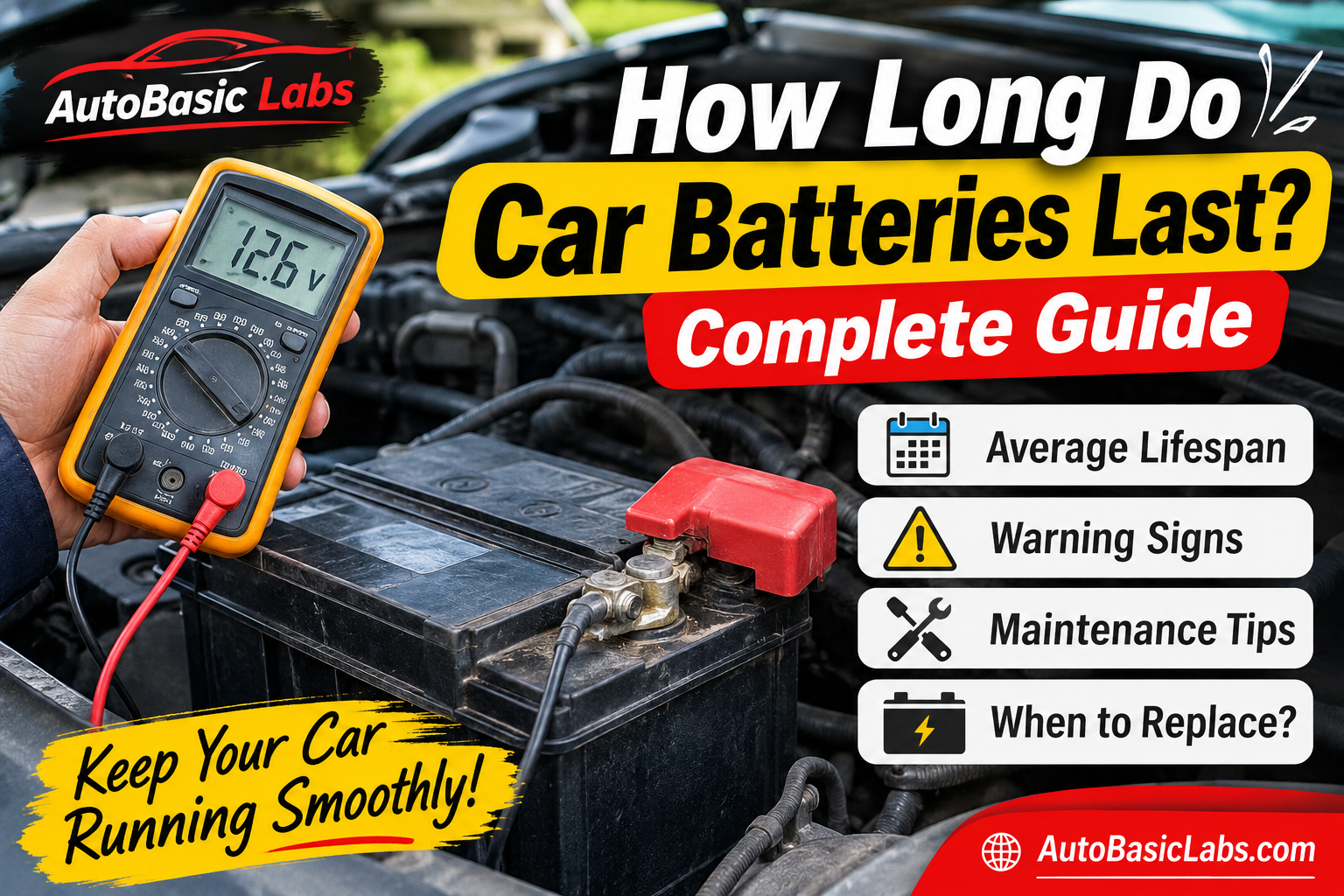
One common question among car owners is: How long do car batteries last? The answer depends on several factors, including weather conditions, driving habits, battery quality, vehicle type, and regular maintenance.
Most traditional car batteries last approximately 3 to 5 years under normal conditions. However, some batteries may fail earlier, while others can continue working beyond five years if they receive proper care.
In this guide, we will explain how long car batteries last, what affects their lifespan, how to recognize a weak battery, and what you can do to keep your car battery working for longer.

How Long Do Car Batteries Last on Average?
Most standard lead-acid car batteries have an average lifespan of around 3 to 5 years. This is a general estimate rather than a fixed replacement schedule. Your battery may last longer or shorter depending on how you use and maintain your vehicle.
For example, a car driven regularly on longer journeys may keep its battery charged more effectively than a vehicle that remains parked for several weeks.
Similarly, extremely hot or cold temperatures can affect battery performance and reduce its useful life.
Here is a general comparison of different battery types:
| Battery Type | Average Lifespan |
|---|---|
| Standard Lead-Acid Battery | 3–5 years |
| AGM Battery | 4–6 years |
| EFB Battery | 3–5 years |
| Lithium-Ion Battery (12V applications) | Varies by design |
These figures are approximate. Actual lifespan depends on the manufacturer’s specifications, vehicle requirements, climate, and maintenance.
7 Important Factors That Affect How Long Car Batteries Last
Understanding what affects battery life can help you prevent unexpected problems and avoid replacing your battery too early.

1. Weather and Temperature
Weather is one of the biggest factors affecting car battery performance.
Hot weather can accelerate chemical reactions inside a battery. Over time, excessive heat can cause internal damage, increase water loss in certain battery designs, and shorten battery life.
Cold weather creates a different problem. It reduces the battery’s ability to deliver power, making it harder for the engine to start. At the same time, cold engine oil can become thicker, requiring more power from the battery during starting.
If you live in an area with extremely hot summers, parking your vehicle in a shaded or covered area can help reduce unnecessary heat exposure.
2. Driving Habits
Your driving habits have a direct effect on battery health.
When you start your car, the battery supplies power to the starter motor. After the engine starts, the alternator helps recharge the battery.
However, very short journeys may not give the alternator enough time to replace the energy used during starting.
For example, repeatedly driving for only five minutes and switching off the engine can gradually leave the battery undercharged.
Try to avoid excessive short trips when possible. Regular, sufficiently long drives help the charging system maintain the battery’s charge.
3. Battery Quality and Brand
Not all car batteries are manufactured to the same standards.
A low-quality battery may have a shorter lifespan, weaker starting performance, or less resistance to demanding conditions.
When buying a replacement battery, consider:
- Battery brand and manufacturer reputation.
- Correct battery size for your vehicle.
- Required cold cranking amps (CCA).
- Reserve capacity (RC).
- Warranty period.
- Manufacturing date.
A good-quality battery that matches your vehicle’s requirements is usually a better investment than choosing the cheapest available option.
4. Vehicle Electrical Problems
Electrical problems can slowly damage a healthy battery.
For example, a faulty alternator may fail to recharge the battery properly. Damaged wiring, loose connections, or a parasitic electrical drain can also cause problems.
A parasitic drain happens when an electrical component continues using power even after the vehicle has been switched off.
Common examples include:
- Interior lights remaining switched on.
- Faulty alarm systems.
- Improperly installed accessories.
- Damaged electrical wiring.
- Aftermarket devices that continue drawing power.
If your battery repeatedly becomes weak, ask a qualified mechanic to inspect the charging system and check for electrical drains instead of replacing the battery immediately.
5. Long Periods Without Driving
Leaving your car unused for weeks can reduce battery charge.
Modern vehicles continue using small amounts of electricity even when parked. Security systems, clocks, onboard computers, and other electronic components may consume power.
If your car remains unused for a long time, the battery can gradually discharge.
For vehicles that are stored for extended periods, a compatible smart battery maintainer can help maintain the charge safely. Always follow the manufacturer’s instructions.
6. Poor Battery Maintenance
A battery does not always fail because it becomes old. Poor maintenance can also shorten its life.
Loose terminals, corrosion, damaged battery cables, and incorrect charging can affect battery performance.
Check your battery periodically and make sure its connections are clean and secure.
Never open a sealed maintenance-free battery or attempt repairs that are not approved by the manufacturer.
7. Heavy Electrical Accessories
Modern cars use many electrical accessories, including touchscreen displays, powerful sound systems, dash cameras, phone chargers, and additional lighting.
These accessories can increase electrical demand, especially when the engine is switched off.
If you regularly use accessories while the engine is not running, you may discharge the battery faster.
Make sure additional equipment is installed correctly and does not place unnecessary demands on your vehicle’s electrical system.

8 Warning Signs That Your Car Battery Is Getting Weak
A failing battery usually provides some warning signs before it stops working completely. Recognizing these symptoms early can help you avoid being stranded.
1. Slow Engine Starting
One of the most common signs is slow engine cranking.
When you turn the key or press the start button, the engine may take longer than usual to start. You may also hear a slow cranking sound.
This can indicate that the battery is struggling to supply enough power.
2. Dim Headlights
If your headlights look weaker than normal, your battery or charging system may have a problem.
You might also notice that interior lights become dim when starting the engine.
However, dim headlights can also result from damaged bulbs, poor connections, or alternator problems.
3. Clicking Sound When Starting
A clicking sound when you try to start your car can indicate insufficient electrical power.
The battery may not have enough charge to operate the starter motor properly.
However, a faulty starter motor or poor electrical connection can cause similar symptoms.
4. Battery Warning Light
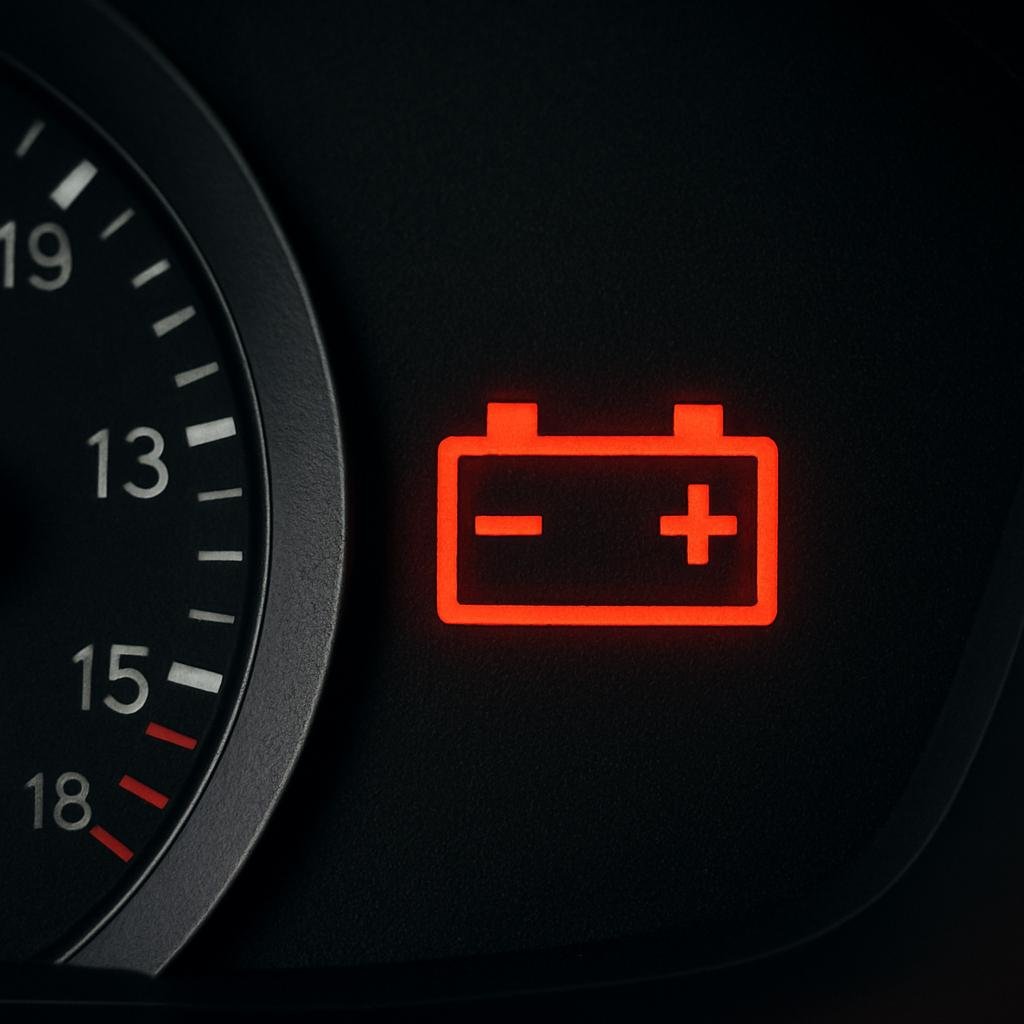
Most vehicles have a battery-shaped warning light on the dashboard.
If this light appears while driving, it may indicate a problem with the charging system.
Do not automatically assume that the battery itself is faulty. The alternator, wiring, belt, or electrical connections may also be responsible.
5. Corrosion Around Battery Terminals
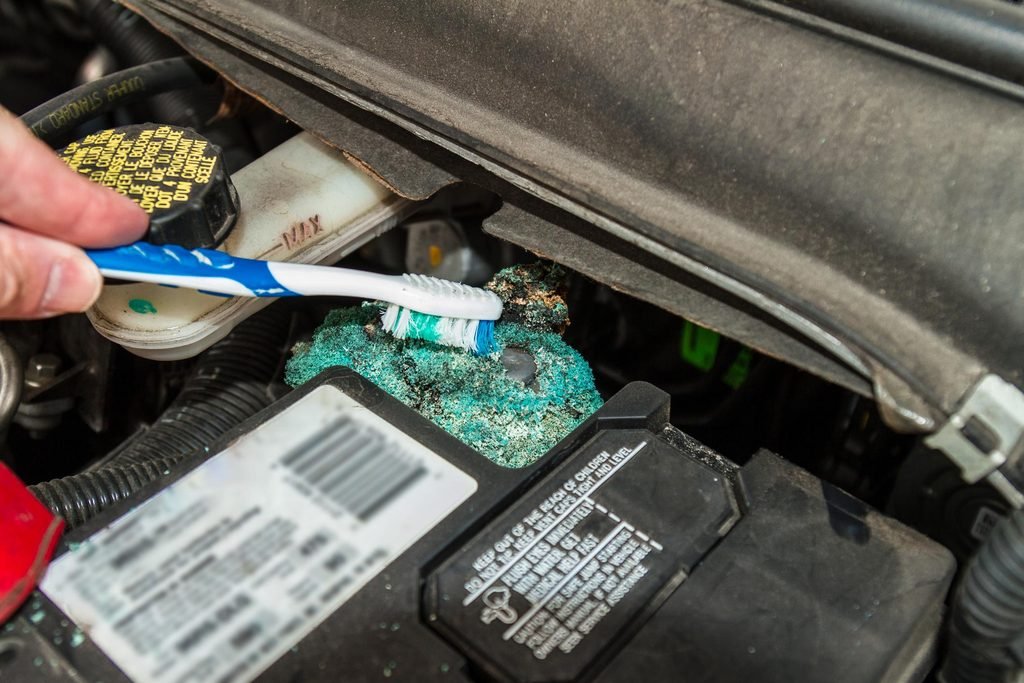
White, blue, or greenish deposits around battery terminals may indicate corrosion.
Corrosion can interfere with electrical connections and make starting difficult.
If you notice significant corrosion, have the terminals inspected and cleaned safely.
6. Swollen Battery Case
A swollen or distorted battery case can indicate excessive heat or internal damage.
This is not a normal condition. Stop using the damaged battery and arrange a professional inspection and replacement.
7. Frequent Jump-Starts
If your car needs repeated jump-starts, something is wrong.
The battery may no longer hold a proper charge, or the alternator may not be charging it correctly.
Repeatedly jump-starting the vehicle is not a permanent solution.
8. Battery Is More Than Four or Five Years Old
Age alone does not prove that a battery has failed. However, an older battery deserves closer attention.
If your battery is approaching the end of its expected lifespan, have it tested before a long journey or during routine servicing.
How to Check Whether Your Car Battery Is Still Healthy
You do not always need to wait until your vehicle stops starting. There are several ways to check battery condition.
Step 1: Inspect the Battery Physically
Open the bonnet and locate the battery.
Look for:
- Cracks or damage in the battery case.
- Swelling or unusual deformation.
- Corrosion around the terminals.
- Loose battery connections.
- Damaged cables.
If the battery is leaking, swollen, or physically damaged, do not handle it unnecessarily. Get professional assistance.
Step 2: Check Battery Voltage
A digital multimeter can help measure battery voltage.
For a fully charged conventional 12V lead-acid battery at rest, the reading is generally around 12.6 to 12.8 volts.
A reading around 12.4 volts may indicate partial discharge, while a reading near 12.0 volts suggests a significantly discharged battery.
These readings are general guidelines. Battery chemistry, temperature, and resting time can affect the results.
Step 3: Test the Battery Under Load
A battery can show reasonable voltage but still fail to provide enough power when starting the engine.
A professional load test or conductance test checks the battery’s ability to deliver starting power.
This is particularly useful when your car starts slowly or frequently needs jump-starting.
Step 4: Check the Alternator
A healthy battery depends on a properly working charging system.
If the alternator is not charging correctly, even a new battery may become weak.
Ask a mechanic to check the alternator output, charging connections, and electrical system.
How to Make Your Car Battery Last Longer
If you want to avoid unnecessary replacement costs, follow these practical maintenance tips.
1. Keep Battery Terminals Clean
Inspect battery terminals regularly. Dirt and corrosion can affect electrical connections.
Have corrosion cleaned safely and make sure terminals are properly secured.
2. Avoid Leaving Lights On
Headlights, interior lights, and other accessories can drain your battery when the engine is off.
Before leaving your vehicle, check that all lights and electrical accessories are switched off.
3. Drive Your Car Regularly
Long periods without driving can allow the battery to discharge.
Regular driving gives the alternator an opportunity to recharge it. However, driving time alone cannot fix a damaged battery or faulty charging system.
4. Park in a Suitable Place
Whenever possible, park your vehicle in a garage or shaded location.
Reducing exposure to extreme heat can help protect the battery from unnecessary temperature stress.
5. Check Your Battery During Routine Servicing
Ask your mechanic to inspect battery condition, charging performance, and electrical connections during regular servicing.
Early testing can help identify a weak battery before it fails unexpectedly.
6. Choose the Correct Replacement Battery
Always select a battery that meets your vehicle manufacturer’s specifications.
The correct size, terminal arrangement, battery technology, and CCA rating are important.
Some modern vehicles require battery registration or coding after replacement. Check your vehicle’s service requirements.
When Should You Replace Your Car Battery?
You should consider replacing your car battery when it can no longer hold sufficient charge, fails a professional battery test, or repeatedly struggles to start the engine.
Do not replace a battery based only on its age.
Before purchasing a new one, check the following:
- Is the battery older than its expected service life?
- Does the engine crank slowly?
- Has the battery failed a proper test?
- Does the battery repeatedly lose charge?
- Is the alternator working correctly?
- Are there any electrical drains?
If the battery is damaged, swollen, or leaking, arrange a replacement promptly.
A professional mechanic can help determine whether the battery or another part of the electrical system is responsible.
What Happens If You Ignore a Weak Car Battery?
Ignoring a weak battery can create several problems.
First, your vehicle may suddenly fail to start, leaving you stranded at home, in a parking area, or during a journey.
Second, repeated low-voltage conditions may affect some vehicle electronics or trigger warning messages.
Third, a weak battery can make it difficult to identify other electrical problems because the vehicle may not receive stable power.
It is better to test a suspicious battery early rather than waiting for a complete failure.
Frequently Asked Questions About Car Battery Life
1. How Long Do Car Batteries Last on Average?
Most traditional car batteries last approximately 3 to 5 years. However, weather, driving habits, battery quality, and maintenance can affect their lifespan.
2. Can a Car Battery Last 7 Years?
Yes, some batteries can last seven years, but this is longer than the typical lifespan of many conventional car batteries. Regular testing is important as a battery gets older.
3. How Often Should I Replace My Car Battery?
There is no universal replacement schedule. Many drivers start monitoring battery condition more closely after three years and replace it when testing shows that it can no longer perform reliably.
4. Does Hot Weather Damage Car Batteries?
Yes. High temperatures can accelerate chemical reactions and increase internal battery deterioration. Extreme heat can shorten battery lifespan.
5. Can a Car Battery Die While Driving?
A healthy battery is normally supported by the alternator while the engine is running. However, if the alternator or charging system fails, the vehicle may eventually lose electrical power.
6. How Do I Know If My Battery Needs Replacement?
Slow starting, repeated jump-starts, failed battery tests, and an inability to hold charge are common signs. A professional inspection can confirm the problem.
7. Does Driving Every Day Make a Battery Last Longer?
Regular driving can help maintain battery charge, particularly when journeys are long enough for the alternator to replace the energy used during starting. However, daily driving does not guarantee a longer battery lifespan.
8. How Long Can a Car Sit Without Being Driven?
There is no exact answer because battery condition, temperature, vehicle electronics, and battery age all matter. Some vehicles may experience starting problems after a few weeks of inactivity, particularly if the battery is already weak.
Final Thoughts
Understanding how long do car batteries last can help you maintain your vehicle and avoid unexpected starting problems. Most conventional car batteries provide around 3 to 5 years of service, but their actual lifespan depends on temperature, driving habits, electrical conditions, and maintenance.
Pay attention to warning signs such as slow engine starting, dim headlights, dashboard battery warnings, and repeated jump-starts. Regular battery testing and proper maintenance can help you identify problems early.
Remember that replacing a battery is not always the answer. Sometimes a faulty alternator, damaged connection, or electrical drain is the real cause of the problem.
At AutoBasic Labs, our goal is to help car owners understand their vehicles, recognize common problems, and make better maintenance decisions. Taking care of your battery today can save you time, money, and trouble tomorrow.